The Great Hair Deception: How to Spot AI vs. Authentic Salon Videos

Hey Readers 🤗
I hope everyone is doing great! Well, the AI age has officially begun, and almost everyone - whether professional or amateur - is trying thier hands hard on it.
That is why most of us can easily see a lot of videos on our social feeds, especially the ones dealing with beauty and hairstyles. But how can a layman viewer distinguish between a fake AI-generated video and an original one? To be honest, fake ones these days look better than the originals. 😁
To learn this thin difference between original and AI-generated videos, I have written this in-depth article (with an accompanying video explainer as well😉) so that you can easily spot the fake ones and dont get fooled by the extraordinary results.
With the power of AI these days, one minute someone has a dark, blunt bob, and in the next frame, they are tossing a cascade of perfectly blended, sun-kissed blonde waves. It does look like magic!
And lately, it just might be — literally. Welcome to the era of AI-generated hairstyle videos.
As artificial intelligence continues to infiltrate our digital lives, it has confidently strutted into the salon arena. But while AI is a fantastic tool for visualizing a new look before committing to the chop, it’s also creating a wildly unrealistic standard for what a real-life hair appointment can achieve.
So, how do you tell the difference between a genuine masterpiece crafted by a skilled hairstylist and a digital illusion? Grab a coffee (and maybe a hair mask), and let’s dive in.
A Tale of Two Clips: The Robot vs. The Real Deal
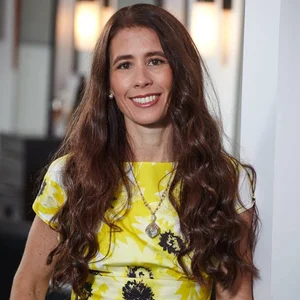
To truly understand the difference, let’s look at a perfect real-world example — two videos featuring the exact same client in a salon chair. An exclusive live example given to you in this video by your own hair servant - myself 🤗:
As you can see, in the first clip, the client is tossing her freshly styled hair and smiling at the camera. However, over the footage, a polished, slightly robotic voiceover enthusiastically declares, “Look at these gorgeous no-bleach highlights! Majirel high-lift colors deliver perfect shine”.
The clip wraps up with the voice saying, “You look absolutely amazing”. While the hair undeniably looks stunning, the video feels less like a genuine moment and more like a sterile, manufactured advertisement.
The audio is layered perfectly over the visuals, stripping away the authentic atmosphere of the salon. That’s the power of generative AI (and no wonder, it is awesome 😎).
Now, let's combine that with the second clip.
This is the original, unadulterated footage. Here, we hear the actual voice of the hairstylist instructing the client, “And now you can move it around”.
The client, looking naturally slightly unsure of how to pose, responds with a questioning, “Like?”. The stylist encourages her with a simple “Yeah,” prompting the client to run her hand through her new layers and let out a genuine, infectious laugh. 😁
The difference is like night and day!
The second clip breathes. It has the slightly awkward charm of a real human interaction, complete with the ambient acoustics of a room.
The first clip, however, has been hijacked by an AI text-to-speech voiceover — likely to aggressively market a specific product without having to actually film a commercial.
Beyond the Surface: Fully AI-Generated Hair Videos
While our example clips show a real video layered with AI audio, the rabbit hole goes much deeper.
Today, many AI platforms offer powerful "AI Haircut Transformation" video generation. These tools allow users to upload a single static image or short clip and use AI to morph the subject’s hair into completely different styles, lengths, and colors in seconds.
While these platforms are marketed as helpful preview tools for salons to show clients potential results, they are frequently used on social media to farm engagement with "fake" makeovers.
That’s where the problem lies - realistic expectations from unrealistic results. Other than that, AI is not an issue.
Here are some other tangible examples of what's out there:
The Seamless Color Flip: AI generators specialize in taking a portrait and rendering a smooth, frame-stable shift from one hair color to another. You’ll see videos where a brunette magically turns into a neon-pink mermaid with a literal snap of their fingers, with no awkward bleaching stages or foil processing in between.
The Virtual Scissor Chop: AI video generators can simulate long hair being "cut" into a trendy wolf cut or a sharp bob, all without a single real strand hitting the floor.
How to Spot the Fakes Like a Pro
So, how can you protect yourself from falling for the digital trickery? Here is your definitive guide to spotting an AI-generated or altered hairstyle video:
Listen to the Audio (or Lack Thereof): As we saw in our salon clips, audio is the biggest tell. Real salons are noisy! You should hear the authentic, unscripted banter between the stylist and the client. If a video features a perfectly crisp, heavily scripted voiceover pushing a specific brand—like the "Majirel high-lift colors" pitch—there’s a good chance it’s an AI dub.
Watch the Hair Physics: Real hair has weight, friction, and texture. When a client runs her hand through it, the strands catch on her fingers, separate naturally, and fall with gravity. AI-generated hair, by contrast, often moves like water or a solid helmet. Look closely at the edges where the hair meets the face or neck; AI often struggles to render individual flyaways, resulting in a slightly blurry or unnaturally smooth halo effect.
Check the Lighting and Shadows: In a real salon, ring lights and overhead bulbs interact with the hair's color, creating dynamic highlights and shadows as the person moves. AI filters often apply color in a uniform, flat block. If the light source seems to change dramatically but the hair's shine stays perfectly static, you’re likely looking at a digital paint job.
The Hands and Jewelry Test: AI notoriously struggles to render human hands and intricate objects. If you see a video where a stylist's hands are moving through the hair, pause and look closely. Are the fingers blending into the hair? Do the client's earrings or necklaces warp when the hair brushes past them? If so, the video has been digitally tampered with.
Yeah! You didn't think of all this, right? 😉 Well, no worries when Dania is at your service always!
Why Does It Even Matter?
You might be thinking, “So what if it’s fake? It’s just internet content.” And you’re right, it’s entertaining! But it becomes a problem when these digital illusions set impossible expectations for real-world salon visits.
If you take a heavily AI-altered video to your stylist and ask for a color transition that literally defies the laws of chemistry (like going from box-black to platinum blonde in a single, damage-free session), you’re setting yourself up for disappointment.
Real hair has limits. It takes time, money, and structural integrity to achieve big transformations.
The Verdict
AI tools are incredible for experimenting with your look before you commit to the big chop. But when it comes to celebrating hairstyling artistry, nothing beats the real thing.
The next time you see a viral hair video, take a second look. Listen for the natural laughs, look for the imperfect flyaways, and appreciate the genuine human connection that happens in the salon chair.
After all, a robot might be able to generate a flawless set of highlights, but it can never replace the therapy session you get from your favorite stylist. Stay savvy, and keep your expectations based in reality 😊