
Don’t Let Your Hair Drown: A Hairstylist’s Manual for Before/After Swimming Pool Haircare
Hi all,
It’s Dania back again at your service 😇. And this time, I am bringing you something that will soon become a routine for us during the upcoming, expected record-breaking heat season in the States (source: USA Today).
And that bone of contention is the haircare before and after taking a dip in the swimming pool. Swimming pools are a real deal when it comes to mitigating heatwaves of the post-global-warming era, and we frequent them more often.
But while they keep us cool and protected from the sun’s bashing, are they similarly healing for our hair? The pro hairstylist and expert dermatologist community doesn’t think so!
Here’s the bitter truth: Pool water leaves most of us with dry, tangled hair instead of cool, fresh, and mermaid-looking locks. But the water itself is not the culprit. It’s the chemicals that are used to keep it germ-free.
In particular, Chlorine is the frenemy of the beauty world. It keeps pool water clean but strips your hair of its natural oils. If your hair has ever felt like hay or your blonde highlights turned green, that’s some chemical peel-off for your hair.
That is why today I will be diving into the science and strategy of poolside haircare so you can protect your mane from the first splash to towel-off. So, shall we begin? 😉
Dania Morejon shows you by swimming and narrating about pre and post swimming haircare with examples. Visit our YouTube Channel to see more videos like this 😊
1. The Science of the "Stiff" Post-Swimming Pool Hair: Why Chlorine is Problematic?
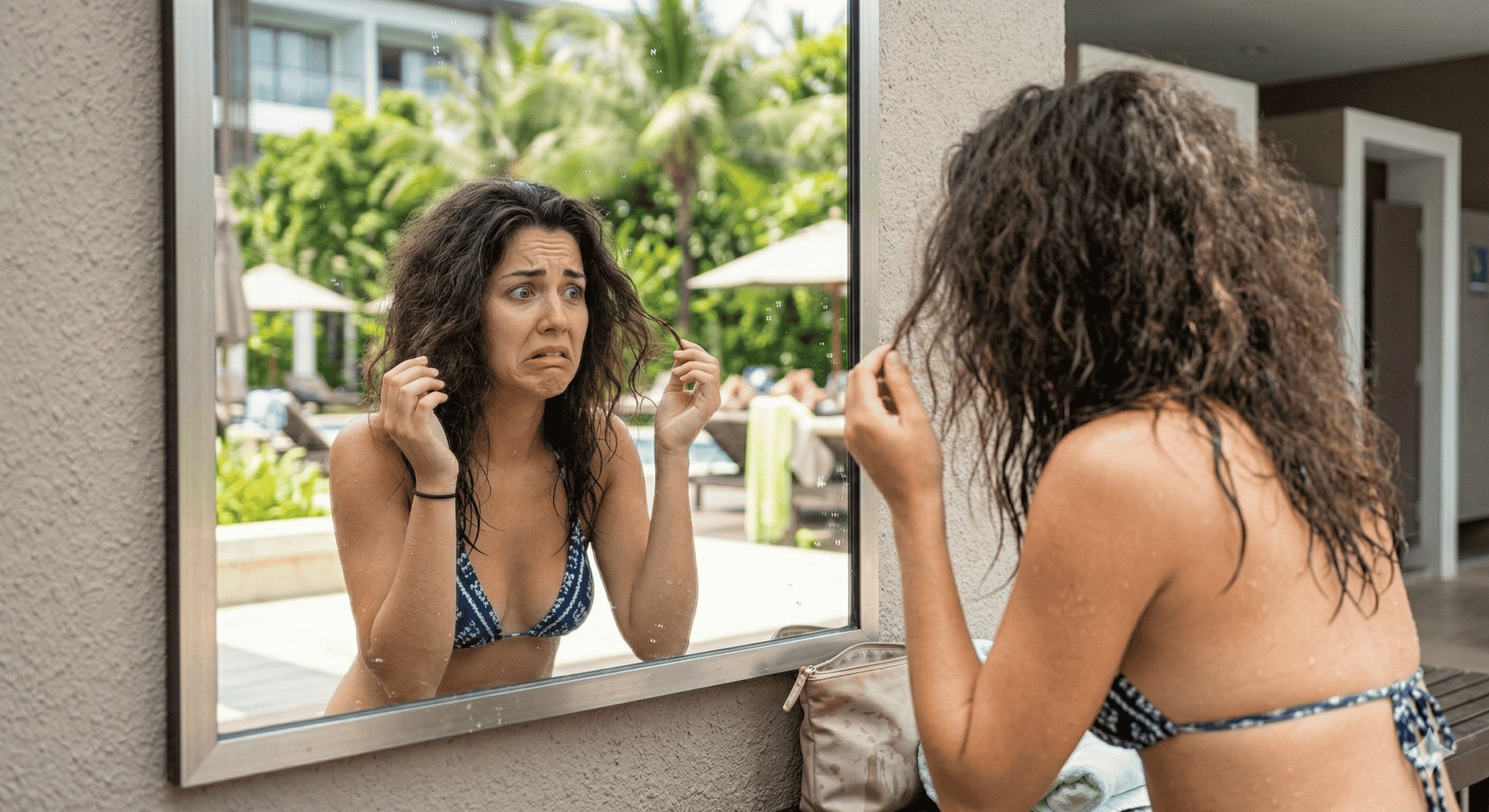
Before we fix the problem, we have to understand the villain. Chlorine is a powerful oxidizing agent. Its job is to kill bacteria, but it doesn't know where or on which surface. It only knows to eliminate it wherever spotted.
Here’s some specific investigation into what chlorine in a swimming pool does to your hair:
The Sebum Stealer: Chlorine strips away sebum, the natural oil that coats and protects your hair shaft. Without sebum, the cuticle (the outer layer of your hair) lifts and becomes porous (source: Healthpub).
The Protein Predator: According to dermatological studies, prolonged exposure to chlorinated water can actually degrade the keratin proteins in your hair, leading to structural weakness and split ends (Nogueira and Joekes - Journal of Cosmetic Science 2015/2016).
The Green Goddess Myth: Fun fact—chlorine doesn’t actually turn your hair green. Copper does! That’s one of the chemicals a swimming pool contains, aside from chlorine. Chlorine oxidizes that copper, which then hitches a ride on your hair’s protein. If you’re blonde, you’re basically a walking science experiment for oxidation 😄.
2. Acing The Pre-Swim Haircare Game: Securing Your Hair Before the Dive
So, if you love boxing, you wouldn't go into a boxing match without a mouthguard, right? Likewise, don’t go into a swimming pool with just "naked" hair. First, protect them and then dip off your body heat (oh yeah 😋🤣).
The goal here is to achieve saturation and overcome barriers. Don’t worry – let me explain!
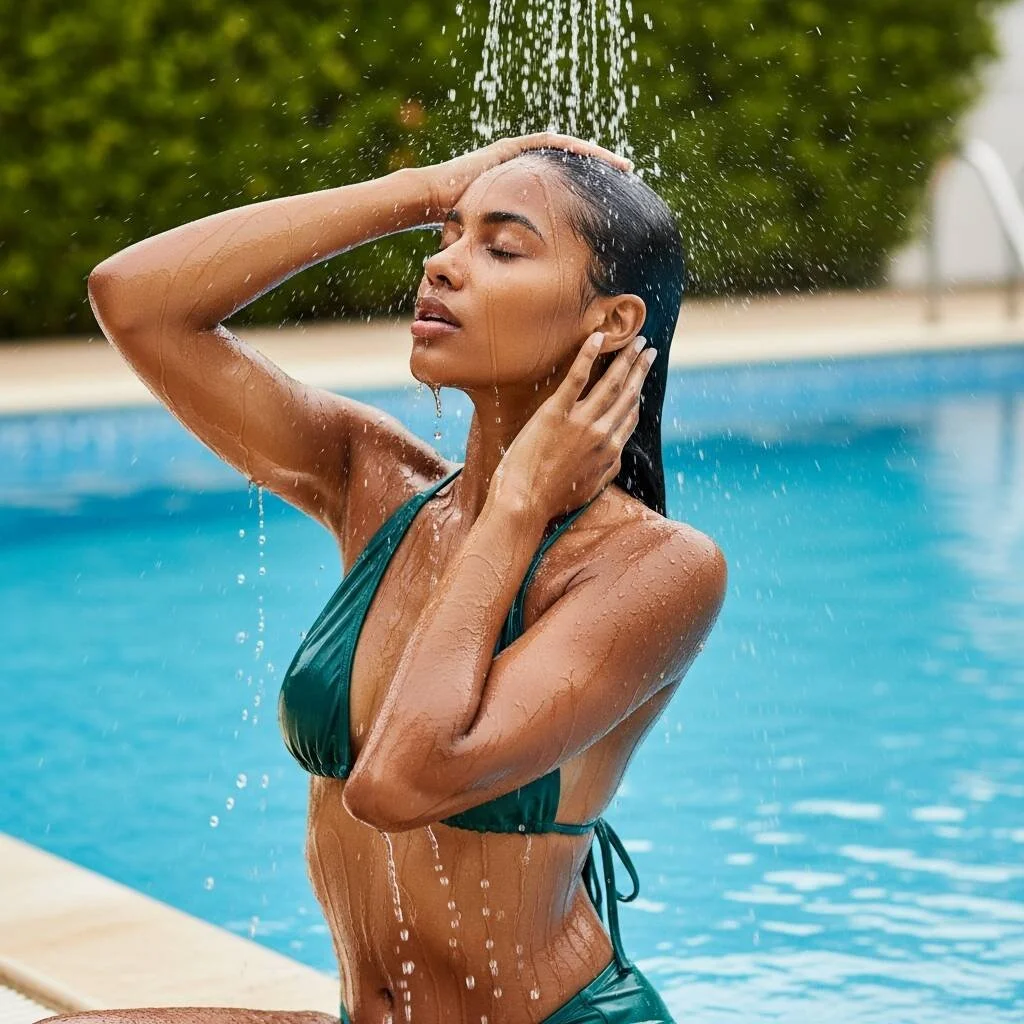
The "Saturate to Success" Trick -:
Your hair is like a sponge. It can only hold so much liquid. If you jump into a pool with dry hair, your thirsty strands will immediately guzzle up the chlorinated water. That is not something you would want your hair to suck freely – no, sir!
The Fix: Thoroughly soak your hair with clean, fresh tap water before you take a dive in the swimming pool. If your hair is already full of fresh water, there’s significantly less room for the chemical cocktail to set in.
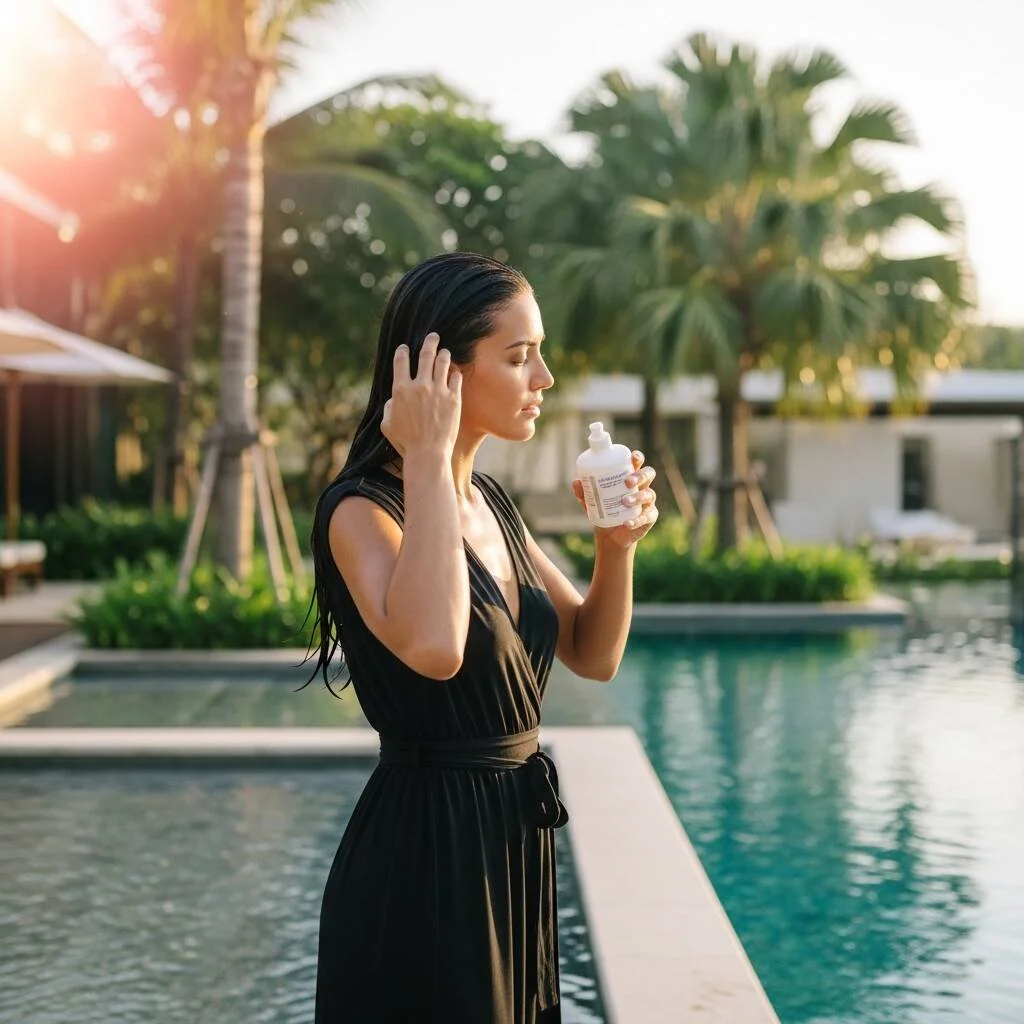
Strengthening the Oil Barrier -:
After nourishing your hair with fresh water, it is now time to apply oil for protection. Here’s how you can do it:
Coconut Oil: This is the heavyweight champion of pre-swimming haircare. Research published in the Journal of Cosmetic Science indicates that coconut oil is among the few oils shown to penetrate the hair shaft and reduce protein loss (Rele & Mohile, 2003).
Leave-in Conditioners: If you don't want to smell like a macaroon, a silicone-based leave-in conditioner works wonders. Silicones like dimethicone create a hydrophobic (water-fearing) coating that helps repel the pool water. If you prefer to avoid silicones or want a more natural option, you can use an aloe vera gel spray or a homemade leave-in mix (try combining water with a little glycerin and your favourite lightweight oil). These create a gentle barrier while nourishing hair naturally.
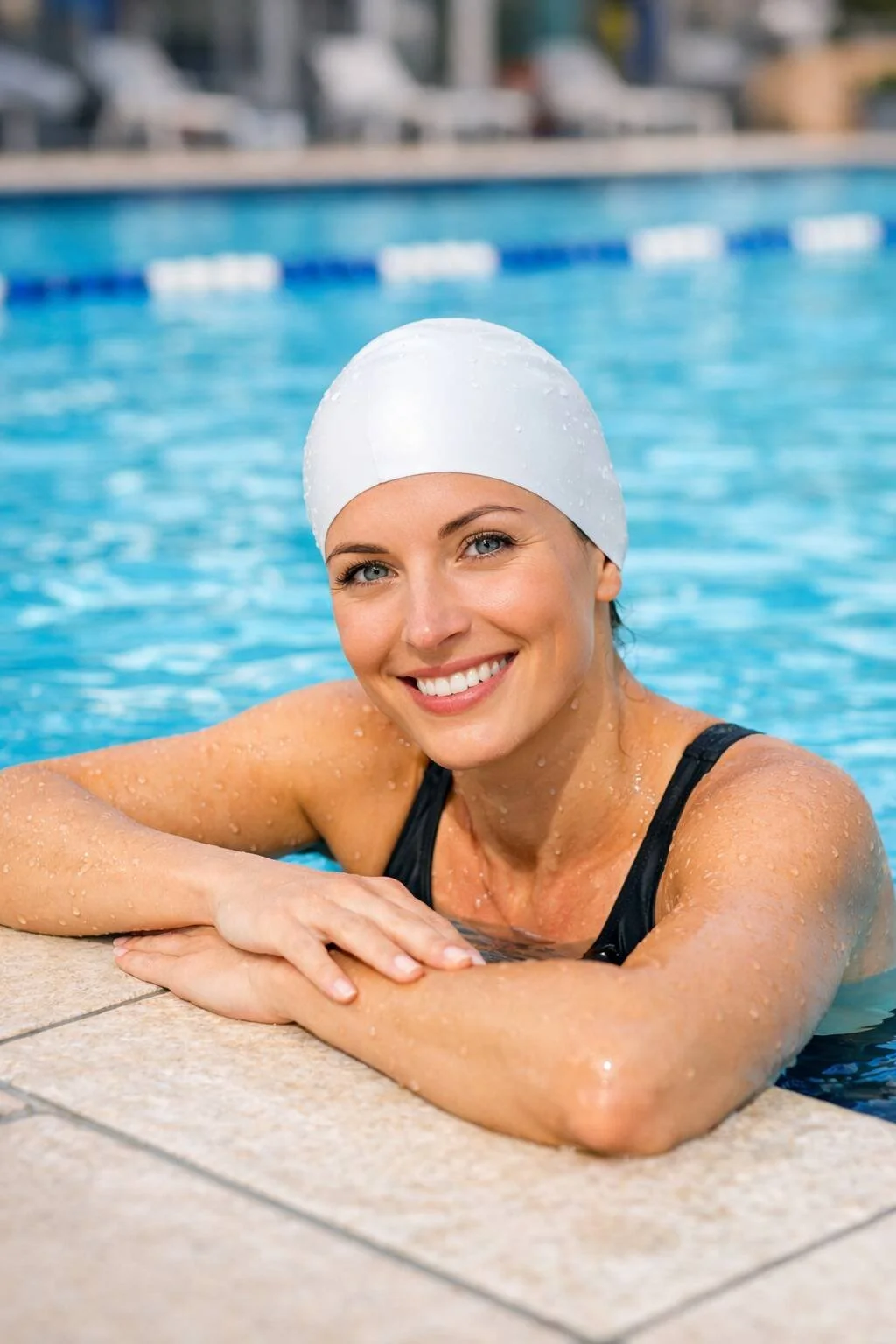
Traditional Weapon at Hand: The Swimming Cap -:
I know it. Nobody feels like a supermodel in a silicone swim cap. One may wonder why I should look like an "egg head." 😁 However, if you are a serious swimmer or have high-maintenance color, a swimming cap will serve as one of the best defenses against chlorinated pool water for your hair.
Hairstylist’s Exclusive Tip: Apply your conditioner, put on the cap, and you have essentially created a heat-activated deep conditioning treatment while you swim. Talk about hair treatment while you swim 😉.
3. During the Dip: Controlling Hair Damage
When you are in the water, there is not much of a hair care job you can do. However, this certainly does not mean an inevitable doom for your hair, unless you follow some rules of engagement:
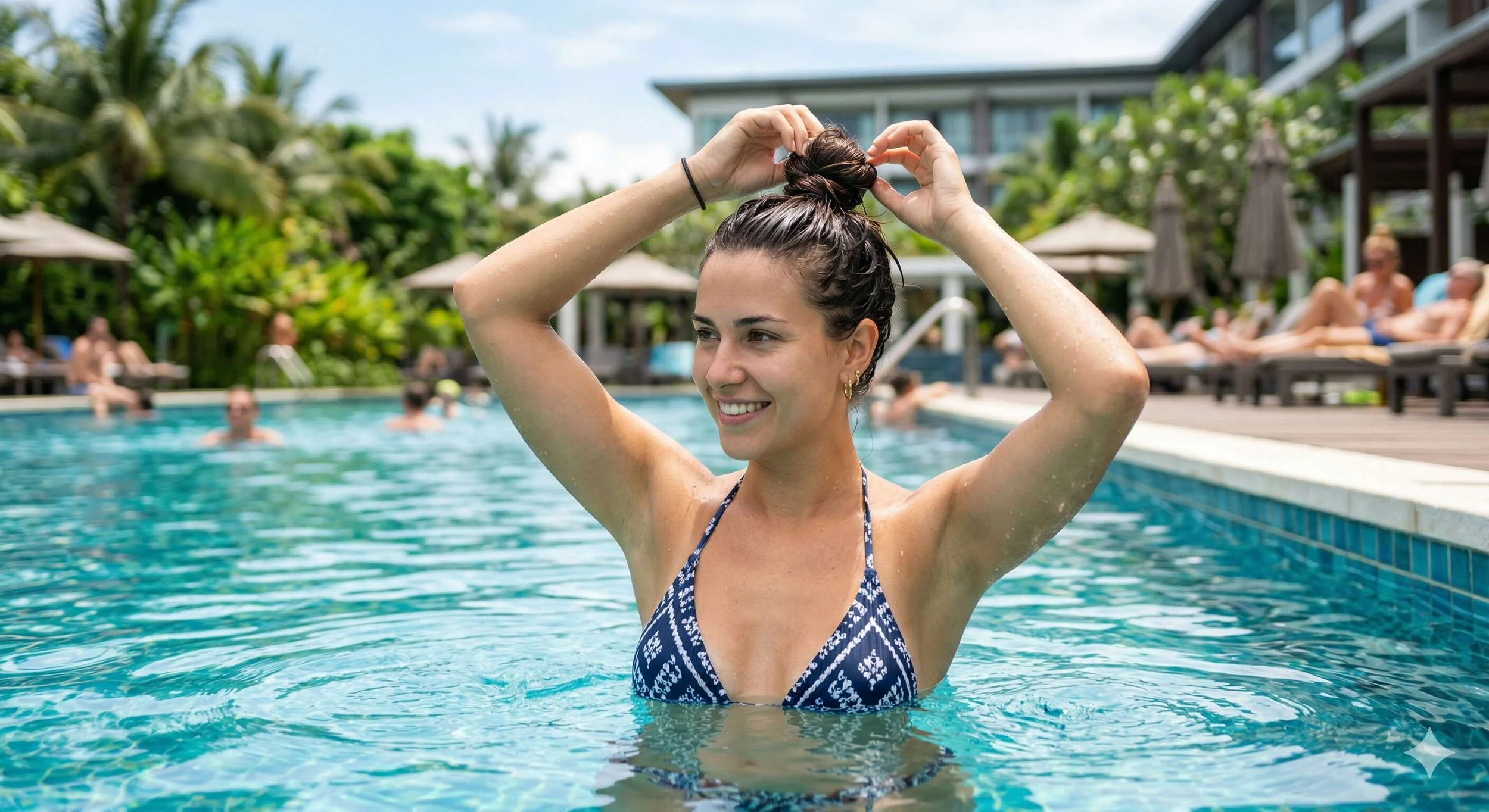
Keep Your Hair High: If you are not planning to submerge your head, put your hair in a high bun or a pineapple-style bun. This significantly reduces the chance of coming into contact with the pool’s water.
Avoid Metal in Hair: I highly recommend my readers avoid using any metal hair accessories when going to a swimming pool. Instead, use "scrunchies" or plastic spiral ties. According to expert dermatologists, repeated exposure to chlorinated pool water can weaken and discolor hair, so using hair ties with metal clasps may increase the risk of damage or rust on the clasps.
4. After Swim Haircare: The Recovery Mission
The moment you step out of the pool, the clock is ticking. The longer chlorine sits on your hair, the more damage it does. So, to save your hair from suffering, you should begin at once with the steps listed below!
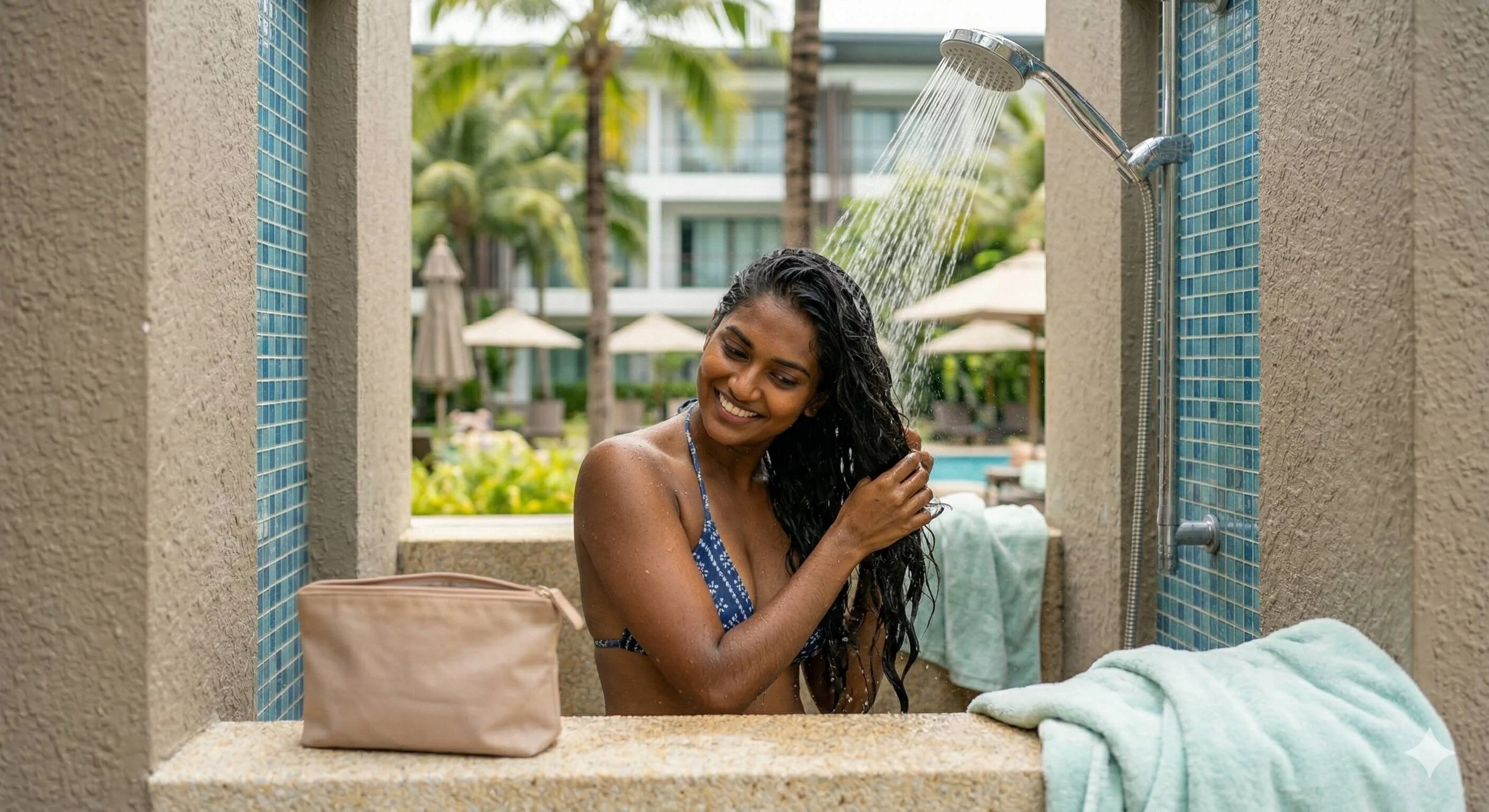
The Power of Immediate Rinse -:
Do not—we repeat, do not—sit in the sun and let your hair air-dry with pool water in it. According to experts, chlorine in tap water removes natural oils from your hair and scalp, which can make your hair dry, brittle, and more prone to damage. Rinsing your hair thoroughly after swimming can help reduce these effects.

The Power of "Chelating" Shampoos -:
Regular shampoo might not be enough to get the "pool" out. You need a Clarifying or, better yet, a Chelating shampoo. Here’s what you actually will need to up your post-swimming pool haircare:
What is Chelating? These shampoos contain ingredients like EDTA (Ethylenediaminetetraacetic acid). These molecules act like little magnets that grab onto minerals and metals (like that pesky green copper) and wash them away.
Warning: These are powerful. Use them only after swimming, as they can dry out if used daily.

The Deep Rehydration -:
Since the chlorine just stripped your hair of its soul (or at least its moisture), you need to put it back:
Use a Mask: Look for ingredients like shea butter, argan oil, or hydrolyzed silk proteins.
The Cold Rinse: Finish your shower with a blast of cold water. This helps "close" the hair cuticle, locking in the moisture and making your hair look shinier.
5. Tailored Advice for Your Hair Type (Swimming Pool Haircare)
Worried about how your hair type will be affected by the swimming pool’s chlorinated water? Well, here are answers to some of your queries 🙂:
Blonde/Bleached Hair -:
Problem: The "Green" Tint
Solution: Tomato Juice/Ketchup Rinse. The red acidity neutralizes the green copper oxidation. It sounds crazy, but it works.
Curly/Coily Hair -:
Problem: Extreme Dehydration
Solution: The L.O.C. Method. (Lead-in, Oil, Cream) Immediately after washing, trap moisture in the curls.
Fine/Thin Hair -:
Problem: Weighted Breakage
Solution: Protein Sprays. Fine hair snaps easily when wet; use a light protein-based leave-in to add structural integrity.
Color Treated Hair -:
Problem: Fading & Brassiness
Solution: UV Protectant Sprays. The sun + chlorine = a bleach-fest for your expensive salon color.
6. Myth-Busting the Poolside Haircare
Well, along with logical haircare methods for pre- and post-swimming pool haircare, there are some myths that exist which must be debunked as well.
"My hair will be fine if I just wear a hat."
Correction: Hats protect from UV rays (which is great!), but they don't stop the "wicking" effect where moisture travels up the hair shaft. If the ends of your hair are in the water, the chlorine is traveling upward. If you want to cover your hair, a swim cap would fare much better.
"Saltwater pools are 'chemical-free' and safe."
Correction: This is a common misconception. Saltwater pools still use a salt-chlorine generator to create chlorine. While it’s gentler, it’s still chlorinated water. Treat it with the same respect you’d give a standard pool.
7. Expert-Level Recommendations for Pre & Post Swimming Pool Haircare
And in the end, I will leave you with some expert advice to follow before and after taking a dip in a swimming pool for your haircare. Here’s your gold standard routine:
Drench - with tap water.
Coat - with a light layer of coconut oil or a silicone leave-in.
Secure - in a braid or cap.
Rinse - immediately after exiting.
Wash - with a chelating shampoo.
Restore - with a deep conditioning mask.
Final Words …
By taking just five extra minutes before you jump in, you can save yourself five hours of detangling and deep conditioning later. Hair is a delicate fiber, but with the right barrier and a quick post-swim cleanup, you can enjoy the water without sacrificing your style. Now go forth, dive in, and keep those strands as hydrated as your favorite summer cocktail! 😉